

Keeping your brake pads in good condition won’t just ensure that your car stops when it’s supposed to, it’ll also improve the handling, help to ensure peak fuel efficiency, and protect more expensive components of your car. But how often do they need replacing? There are lots of variables when it comes to planning the intervals between brake services at your Nissan dealer, so we’ve compiled a list of things to take into consideration.
Signs That You Should Head to Your Nissan Dealer Straightaway
If the situation is critical, your vehicle will give you signals that you should never ignore. Arrange a brake service immediately if you notice any of the following when the brakes are applied:
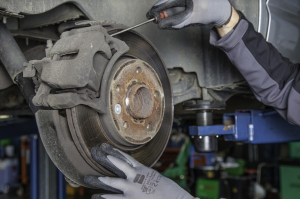
- A squealing or squeaking noise
- A low-pitched rumbling sound
- A soggy brake pedal
- An unusually high or low brake pedal
- A sluggish response
These are all signs of serious pad wear, so your vehicle and your safety could be at risk until you get them fixed.
Planning the Intervals Between Brake Checks
Pads should last between 25,000 and 65,000 miles, although this wide range is easier to navigate if you take some key factors into account. They’re a wearing part, and no matter how carefully you look after them, they won’t last forever.
However, there are some factors that will shorten their lifespan, so if you’re looking to pencil in your next brake service, it’s worth considering how and where you drive your car. If your car’s brakes are having to work harder, they won’t last as long, and it’s better to change them nearer to the 25,000-mile mark.
Consider Your Driving Habits
Heavier braking will wear through your pads more quickly, so your driving habits play a role in their deterioration. “Riding the brakes” means that you use them more often, increasing the rate of wear, while late, heavy braking puts them under more pressure.
Consider the Terrain
Some environments are harder on your brakes than others, so think about where you drive. Heavy traffic means for stop-start driving, and steep hills mean more braking on the downhill stretches. Driving through dust, grit, or sand will also speed up corrosion of the system.
Consider the Conditions
Towing heavy loads or carrying more in the car will make it heavier, and the pads will have to work harder when you bring your car to a halt. Wet conditions lessen the friction on the brakes, but this actually causes more erosion as you have to press them harder.
Your brakes are one of the most fundamental safety systems of your car, and the pads and shoes are there to protect more expensive components of the braking system from harm. If you think that it’s time for a checkup, schedule a brake service at DARCARS Nissan of Rockville. Our certified Nissan service center in Rockville, MD, will ensure that your vehicle is safe and reliable for you.
Connect with us


Recent Blog Entries
- Understanding Nissan’s ProPILOT Assist: Semi-Autonomous Driving
- Four Favorite Features of the 2025 Nissan Rogue
- Understanding Nissan Safety Shield 360: Advanced Safety Features
- Discover the 2025 Nissan Kicks: Style and Efficiency in a Compact SUV
- Understanding the Trim Levels of the 2025 Nissan Sentra